
I Left My DSLR Behind and Found Freedom Instead


To anyone who has been following this blog since my travel and street photography days, you'll no doubt remember that I rarely go anywhere without my camera. And it goes double for trips.
Indeed, any time I flew anywhere, I would pack around my photography gear, and be more than happy to leave behind certain articles just so I had enough carry-on allowance left for my kit. So it will come as no surprise that I did exactly that when I packed for my six-week trip to Warsaw earlier in the year.
The thing that was quite different this time around was the fact that even though I came back home with over a thousand photos, I never actually used my camera.

You see, whenever I go out for a spot of photography, it's always with the intention of capturing art. It’s me walking around familiar streets, camera in hand, hoping to shoot something ordinary in extraordinary ways. The ritual of it has always been part of the creative process. The quiet setup, the focus, the deliberate patience it takes to wait for the light to be just right.
But there was something different about this trip. Whether it was because I was with family whom I hadn’t seen for many years, or because I needed to take care of some personal business, or maybe just because I wanted to reacquaint myself with the city in which I was born - one thing was for sure: I wasn’t there to “shoot photography.”
This time, I was simply living.


And the kind of photography that naturally came out of that wasn’t the curated, intentional kind I was used to. The above scenarios weren’t compatible with the mindset I usually have when all I want to do is zone out for a few hours and see the world through my lens. Instead, any photographic opportunities I had were random and fleeting.
Something would catch my eye; some beautiful architecture, a shaft of sunlight, an old car I had not seen since I was a child, and I knew I only had a few seconds to capture it before it was gone.
So I’d pull my iPhone out of my pocket, quickly frame up my composition, take a few snaps, and get back to whatever I was doing.
And you know what? That was more than good enough.

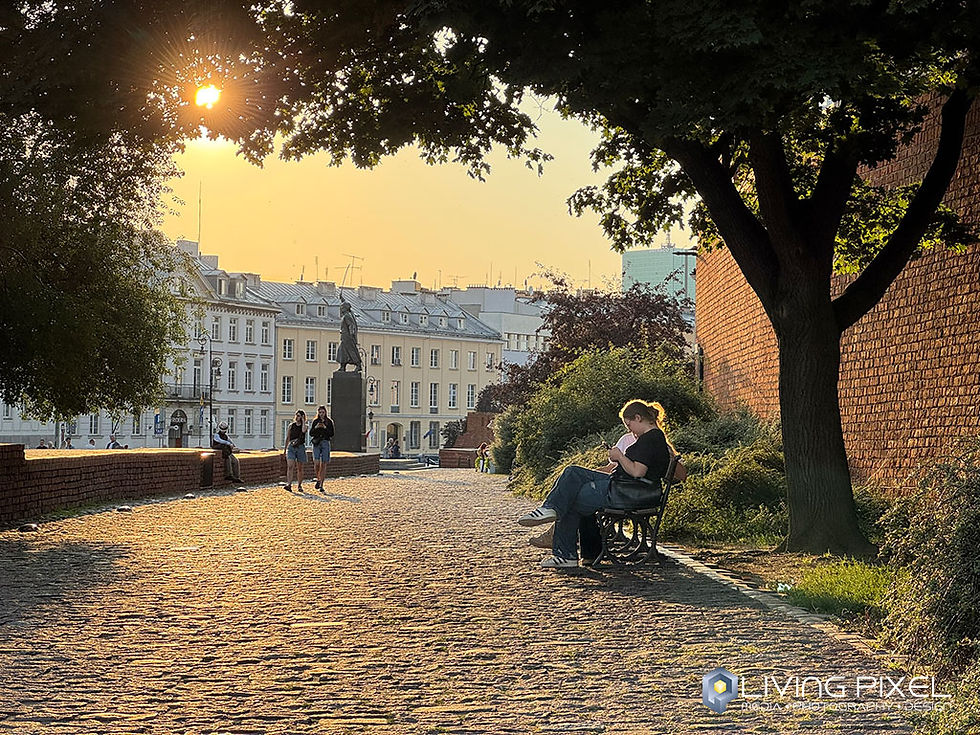
Could I have taken technically better shots if I’d used my larger, heavier DSLR? Perhaps.
The dynamic range might have been cleaner, the bokeh creamier, the resolution higher. But that’s not really the point, is it?
What I realised - almost by accident - was that the best camera really is the one you actually use. And when the moment is fleeting, when you’re living in it rather than orchestrating it, convenience wins every time.
In fact, the crazy thing is that I started to prefer using my phone. There was something liberating about not lugging around a backpack full of lenses and other things. I could just blend in with the crowds and be present. My phone was always in my pocket, ready to go, discreet and fast. It didn’t interrupt the moment. On the contrary, it fit into it.

That’s not to say that dedicated cameras don’t have their place. They absolutely do and I will always stand by that. There’s a meditative quality to shooting with a real camera. Slowing down, thinking about light, composition, and timing. That deliberate process can be deeply satisfying and creatively fulfilling. But for this particular trip, the simplicity of pulling a phone from my pocket and capturing what I saw as I lived it became its own kind of art.
It was a reminder that photography is never about the gear. It’s about connection. It’s about seeing.
Sometimes, it’s not about crafting the perfect image. It’s about holding onto a feeling before it disappears.
And that’s what my iPhone allowed me to do.

For the first time in years, I wasn’t the photographer orchestrating every shot. I was just a person, walking through old streets, revisiting childhood memories, sharing special moments with family, and quietly documenting everything in-between. And in many ways, these photos - these real photos - have become some of my favourites.
Because they weren’t planned. They were lived.


Comments